Preparation: Before the exam, no special preparation is usually required. You can eat normally and take medications as prescribed.
Procedure
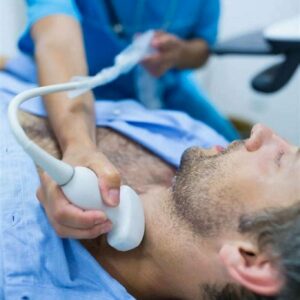
You will lie on an examination table, typically facing upward.
A water-based gel is applied to the skin over the neck area to help transmit ultrasound waves.
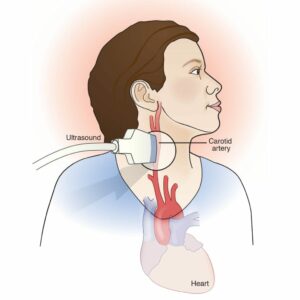
The technologist places a handheld device called a transducer against the skin of your neck. This transducer emits high-frequency sound waves and captures the echoes that bounce back from the carotid arteries.
The transducer is moved gently over different areas of the neck to obtain images of the carotid arteries from various angles.
The ultrasound machine processes the echoes to create real-time images of the carotid arteries and visualize blood flow.
Types of Information Obtained
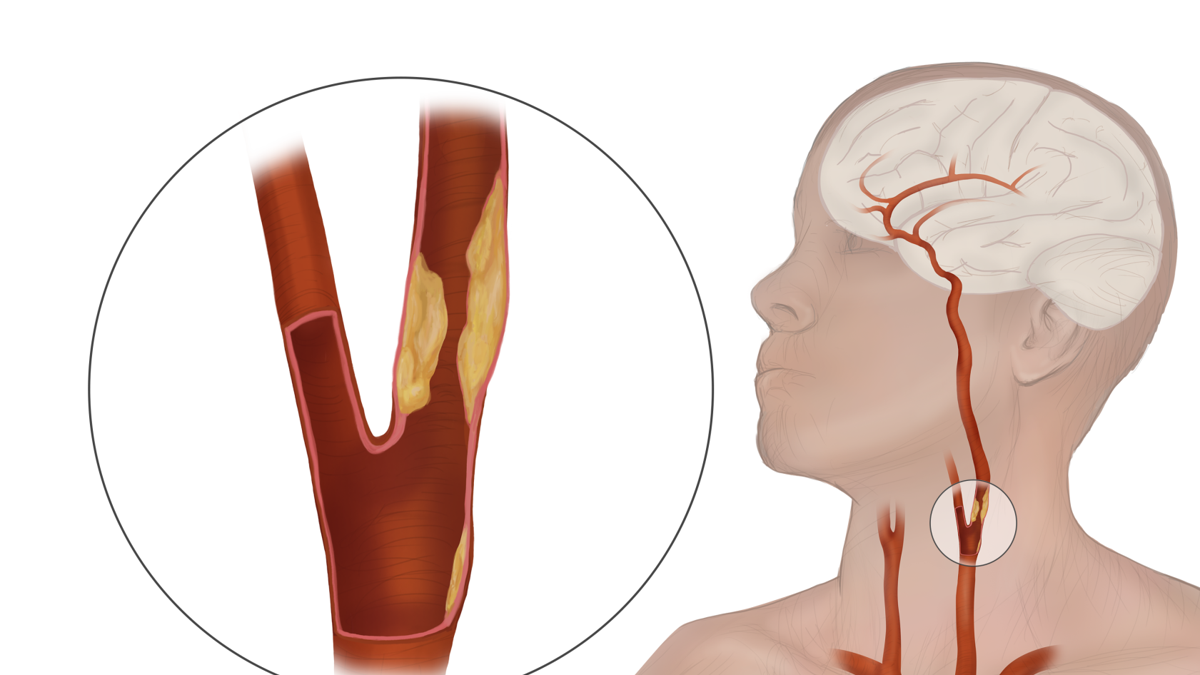
Anatomy: The exam assesses the structure and size of the carotid arteries, detecting any narrowing (stenosis) or plaque buildup (atherosclerosis) that may impede blood flow.
Blood Flow: Doppler ultrasound is used to measure blood velocity and direction within the arteries. Abnormal blood flow patterns, such as turbulence or restricted flow, can indicate underlying vascular disease.
Duration:
The exam usually takes about 15 to 30 minutes to complete.
Why Is a Carotid Duplex Exam Important?
- Detecting Blockages: The exam helps identify significant blockages or narrowing (stenosis) in the carotid arteries. This is crucial because carotid artery disease can increase the risk of stroke or transient ischemic attack (TIA) by reducing blood flow to the brain.
- Assessing Stroke Risk: Patients with carotid artery disease may benefit from early detection and intervention to prevent strokes.
- Guiding Treatment Decisions: The findings of a carotid duplex exam can guide treatment decisions, such as medication management or surgical interventions like carotid endarterectomy or stenting, to restore proper blood flow and reduce stroke risk.
- Monitoring Disease Progression: For individuals with known vascular disease, regular carotid duplex exams can help monitor disease progression and response to treatment over time.
In summary, a Carotid Duplex Exam is a non-invasive ultrasound test that plays a crucial role in assessing carotid artery health, detecting blockages or abnormalities, and guiding treatment strategies to prevent strokes and optimize cardiovascular health. It is an essential diagnostic tool used by cardiovascular technologists to evaluate and monitor patients’ vascular health effectively.